SEO Version


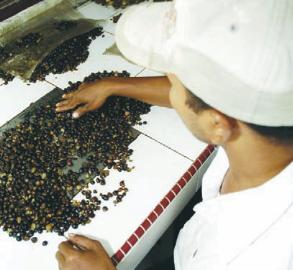
SumBio has a long history and is well known as a premier oil palm
seed producer in Indonesia, commanding the highest price for its
seeds in the market. Each year, SumBio produces up to 25 million
superior and high-yielding oil palm seeds, sold at a premium price
of US$1.50 per seed in the market. PT SAIN produces up to 8
million seeds per year. Since the attainment of an offcial seed
producer certifcation in 2011, PT SAIN has boosted the Group’s
sales capacity by up to 33 million high-quality seeds per annum.
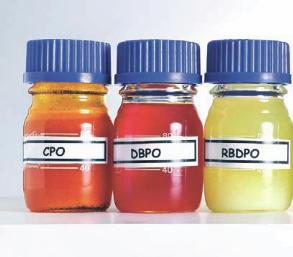
Our R&D capabilities are also applied to product development
– we have an extensive R&D facility for our range of cooking oils,
margarine and shortening products. We are continually looking at
ways to develop our range of merchandise by meeting the specifc
formulations and requirements of our industrial customers and
retail consumers.
Our R&D activities for sustainability cover:
•
Fertilisers recommendations
: Specific formulations are
prepared annually for each block on the basis of yield targets
and yield statistics, annual foliar analysis, established yield
response curves from relevant fertiliser trials and predicted
nutrients release from soils and plant residues, to maintain
optimum palm nutrition and plantation sustainability.
•
Organic fertilisers:
We are continually optimising the use of
mill effuent and by-products as organic fertilisers. In Riau,
we have been using empty fruit bunches (EFB) as soil mulch
since the mid-nineties. This, along with the use of palm oil mill
effuent (POME) in land application, has reduced our need
for inorganic fertilisers by 14% annually. We are also moving
towards the co-composting of EFB and POME, which has the
potential to replace up to 30% of inorganic fertiliser use per
year.
•
Integrated pest management:
Biological pest control agents
have helped us achieve effective pest and disease control.
Barn owls as a rat-control measure have been extremely
effective in our Riau estates, where we have had a zero-
rodenticide practice since 2001. Around 10,000 new birds
are bred annually at 2,500 nest boxes distributed throughout
the estates. We are expanding the use of barn owls to other
estates, which in turn will reduce rodenticide use across all
plantations.
2012 Review
Increased high-yield seed sales:
The Group produced 32.3 million
and 28.6 million high-yielding oil palm seeds in 2011 and 2012
respectively. Part of the high-yielding planting seed material were
for the Group’s new planting of 13,884 hectares and replanting of
941 hectares during the year, which required approximately 200
oil palm seeds for a hectare of land. Most of our high-quality seeds
are sold to external parties, generating additional revenue and
proftability for the Group. In 2012, sales of oil palm seeds grew
5% from 23.5 million seeds to 24.7 million seeds, as a result of
successful breeding programmes and steady industrial demand.
Real-time responsiveness:
With the aid of aerial photography, satellite
technology and Geographic Information System (GIS) tools, we
continued to monitor plantation blocks and draw real-time, accurate
information concerning the health condition of our crops. This has
improved our deployment of manpower, and allowed us to prevent
rather than react to potential agronomic issues.
Plantation
Review
R&D
(Cont’d)
28
Powered by FlippingBook Publisher